G’day from the Sapphire Coast,
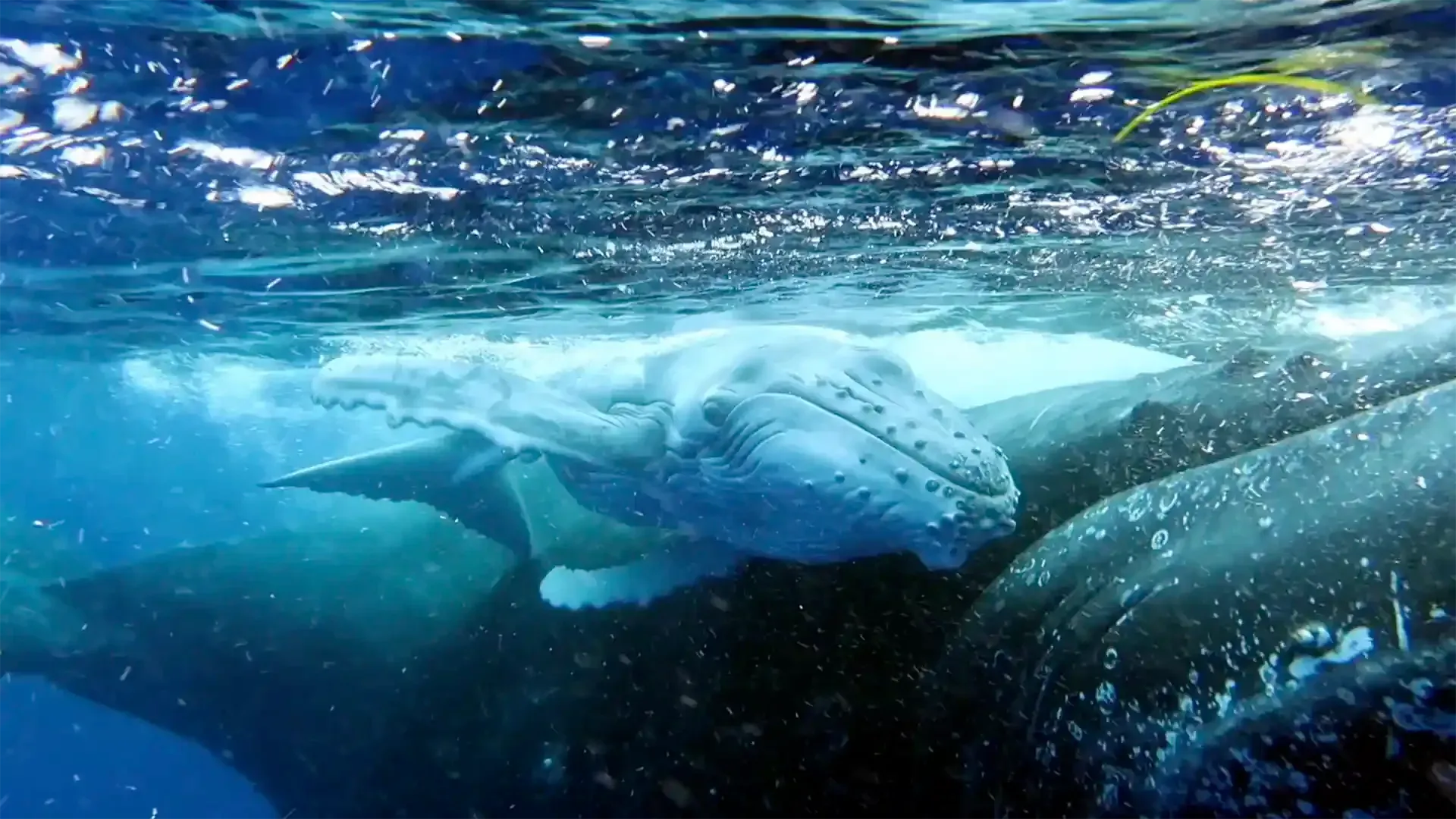
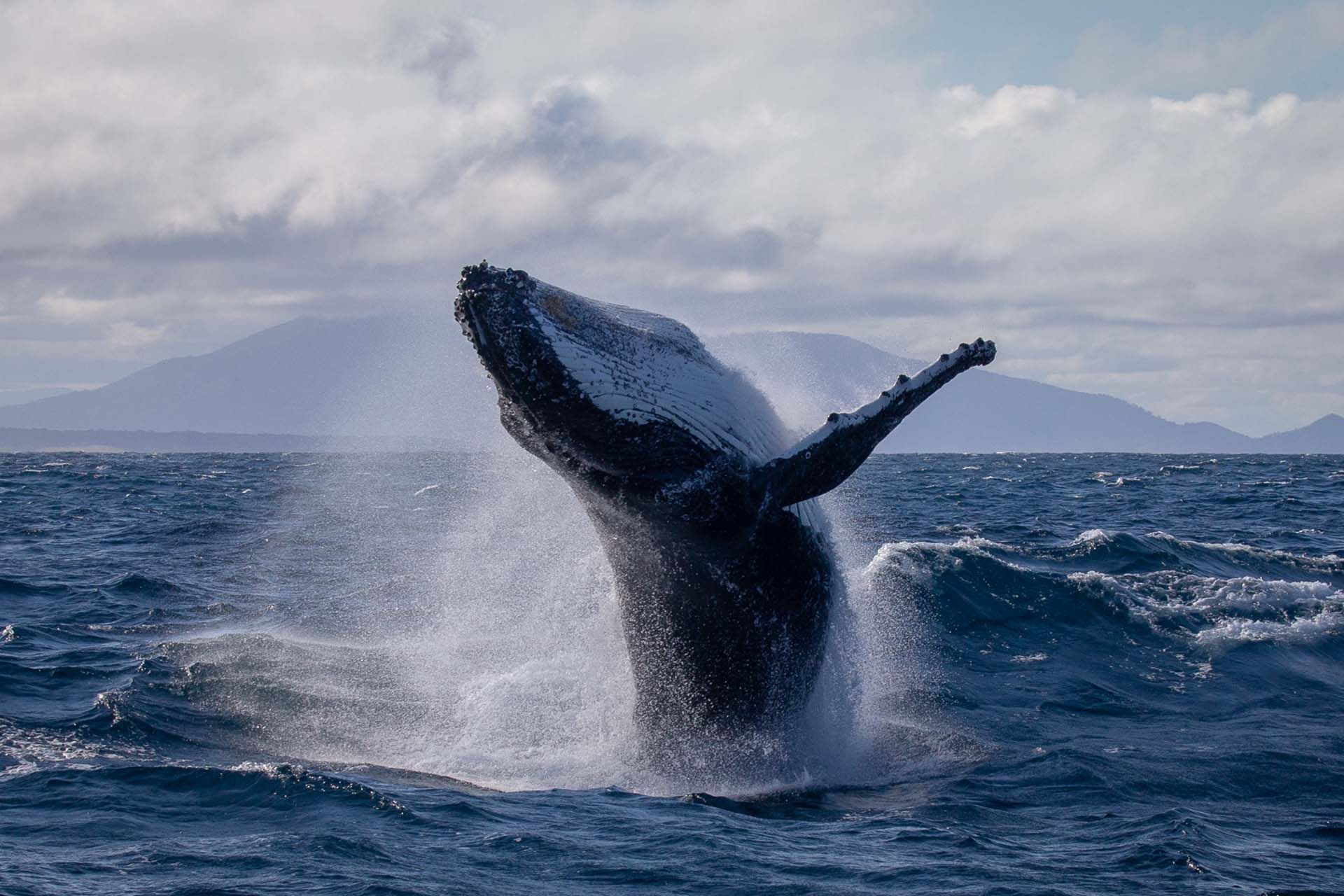
If you've been at an Eden, Merimbula or Bermagui lookout in spring, you will know the feeling. A blow goes up, closer than seems possible, and then a mother and calf surface just off the beach as if they have all the time in the world.
On most of the Australian coastline whales pass by but on the Sapphire Coast, they come in. This month we wanted to explain why, because the answer is a mix of geography, ocean currents and the particular needs of a very young whale. We also want to clear up a common misunderstanding, in that the spring migration is the only one worth coming for. The winter migration out of Eden is a different kind of day on the water, and for some of our regulars it is the one that brings them back.
How Close to Shore Do Whales Come on the Sapphire Coast?
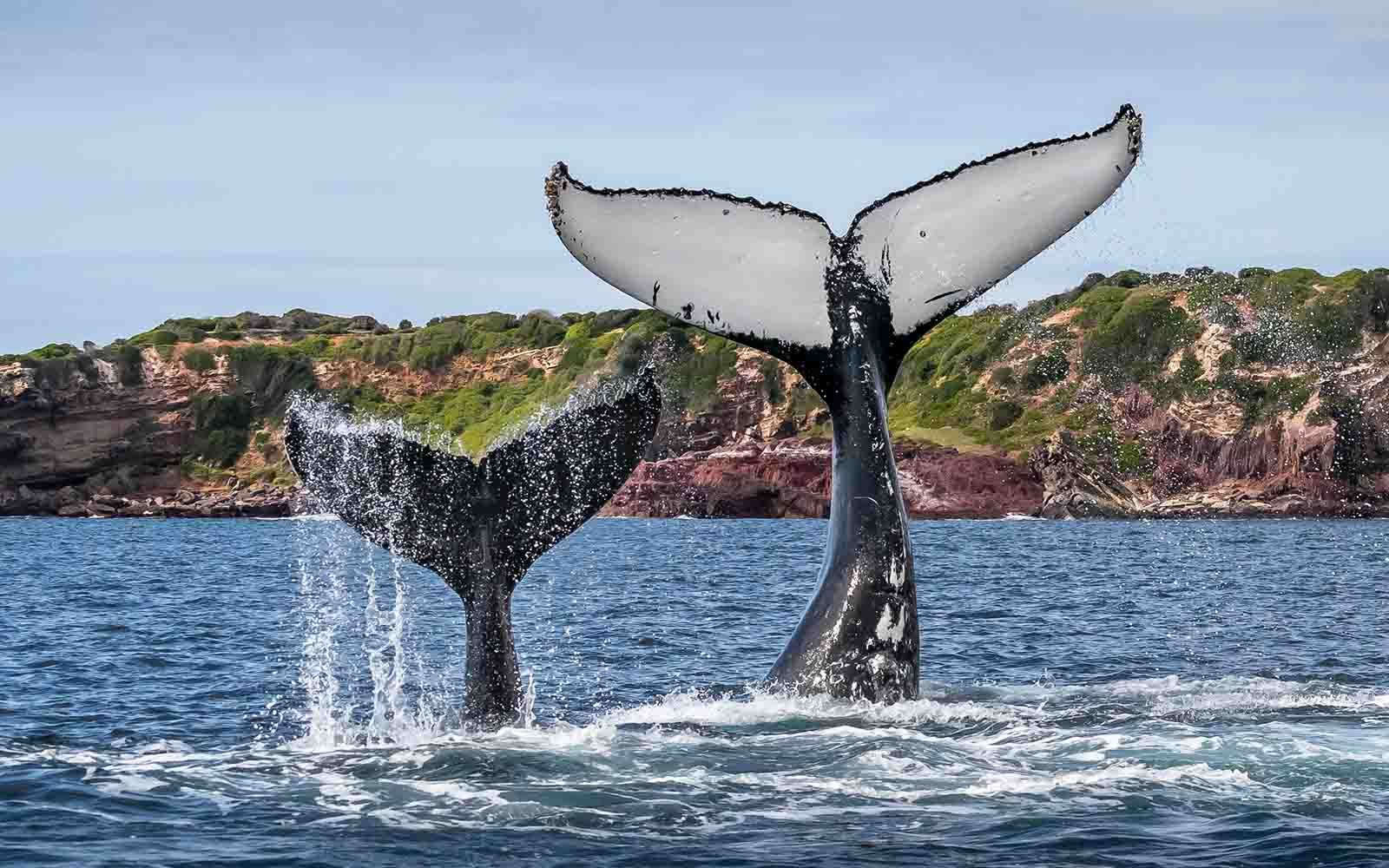
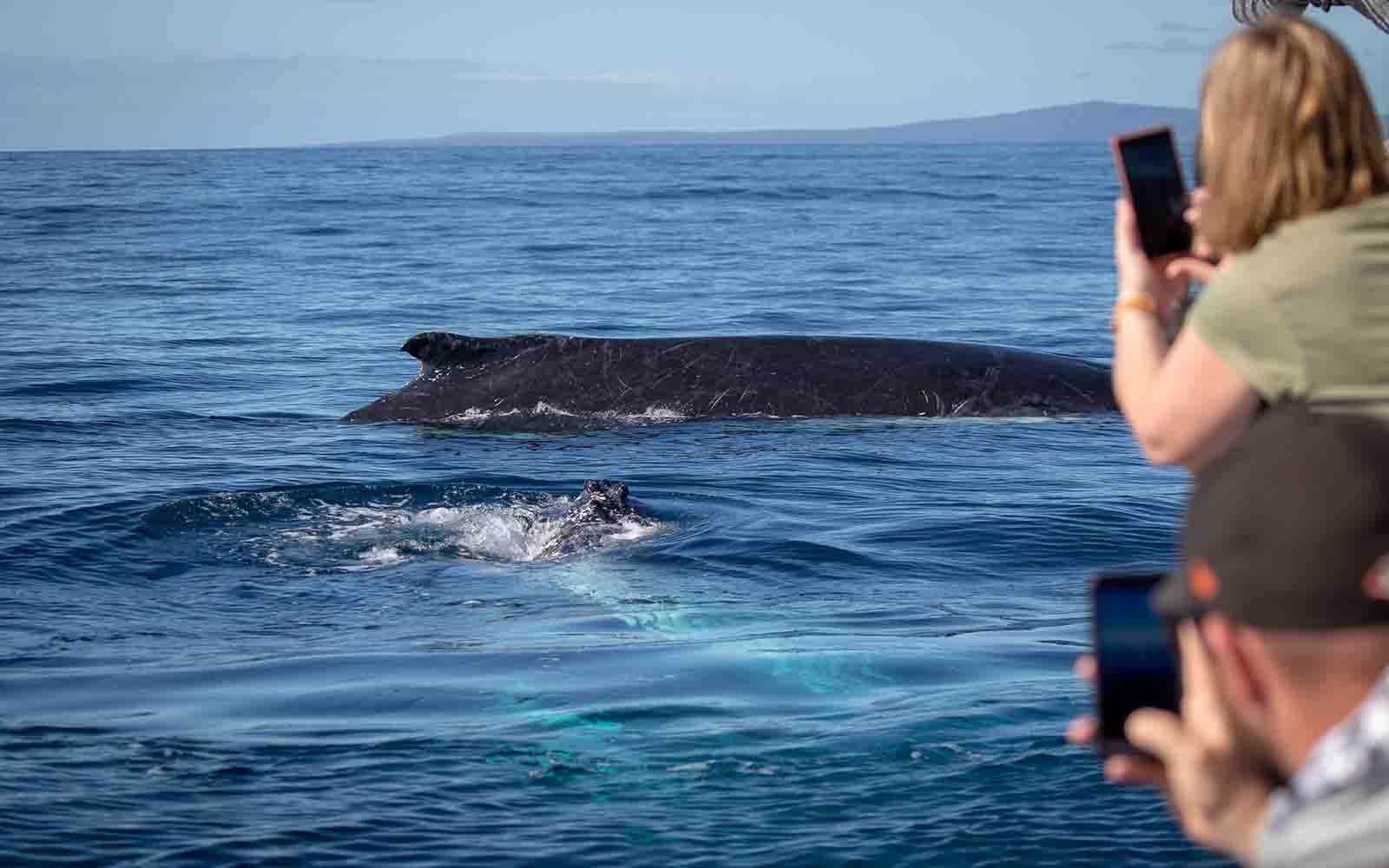
In spring, whales regularly come within a few hundred metres of the shore here, and often right inside the bays. Twofold Bay at Eden is the clearest example. Between September and November, mothers and calves move into the bay to rest and feed, and our crews have watched them cruise along the beaches at Quarantine Bay and Cocora with the township in the background. Merimbula Bay and the water off Bermagui see the same pattern, which is the reason we say three ports, one migration. The whales are not out on the horizon. They are in the waters you can see just off shore.
Why Do Humpbacks Hug the Coast on the Southern Migration?
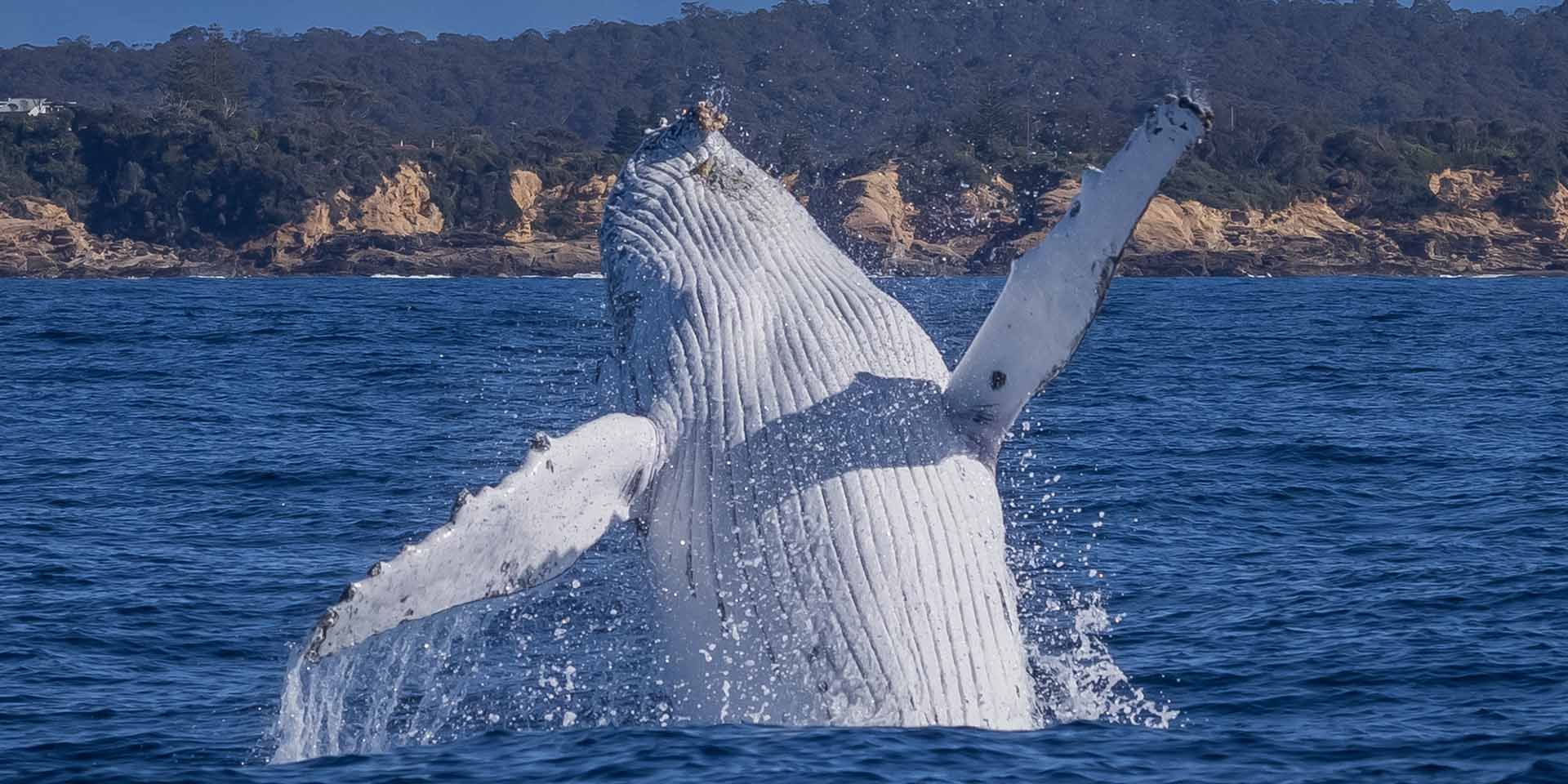
Southbound whales travel close to shore because so many of them are mothers with calves. A calf born off Queensland in winter is only a few weeks old when it reaches us, still nursing, still learning to swim efficiently, and still vulnerable to killer whales and rough water. Mothers keep to calm, sheltered, shallower water where the calf can rest, and they look for bays where they can stop altogether. Research in Jervis Bay has shown that mother and calf pairs travel further into the bay and stay longer than other whales, resting in the lee of the headlands. The same thing happens here, and Twofold Bay is recognised as one of a small number of coastal aggregation areas on the NSW coast.
The East Australian Current plays its part as well. It flows south along the outer edge of the continental shelf, and southbound whales ride it to save energy. Where the current sweeps in towards the coast, as it does along this stretch, the whales come in with it.
What Makes Twofold Bay So Good for Whales?
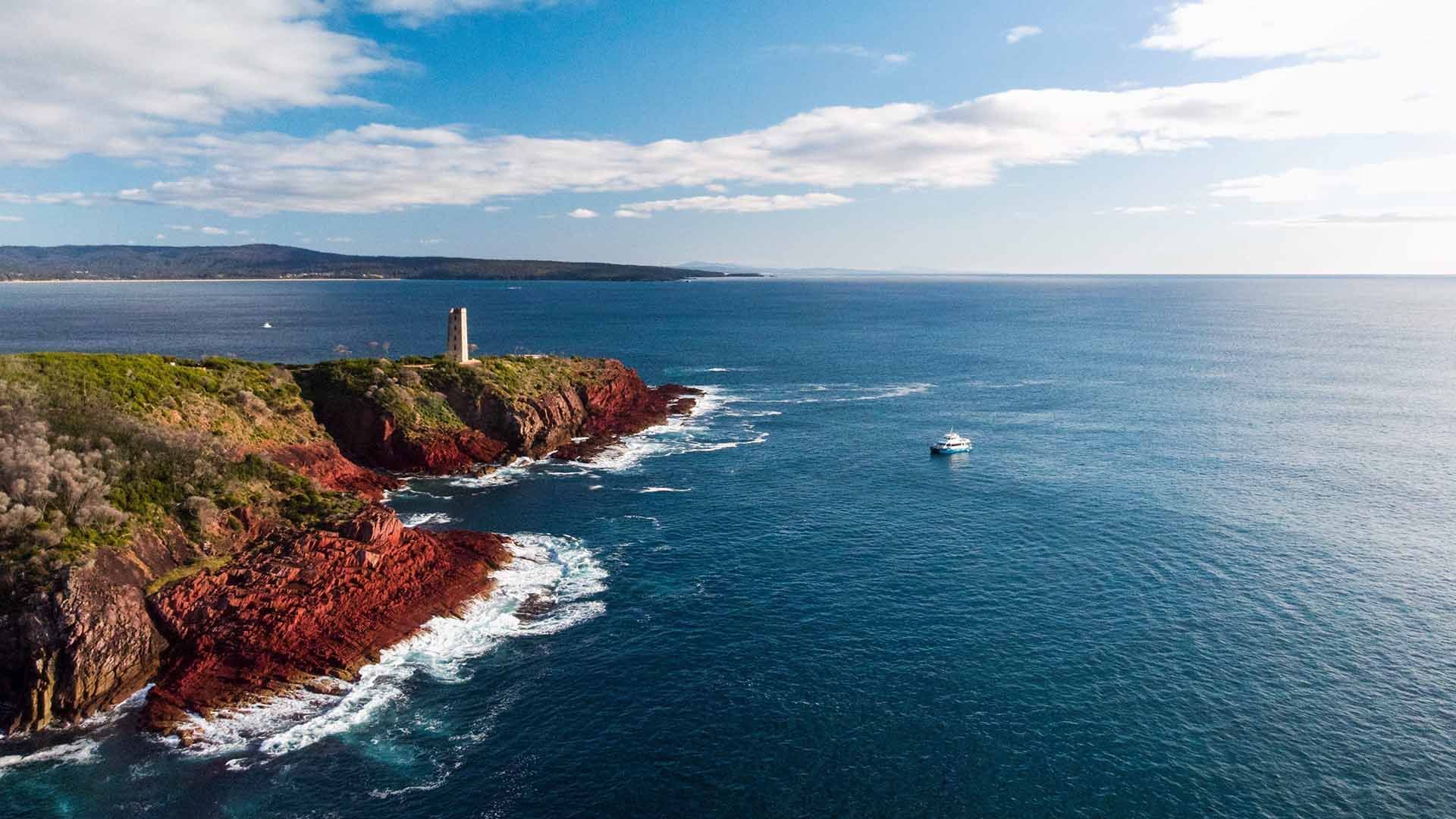
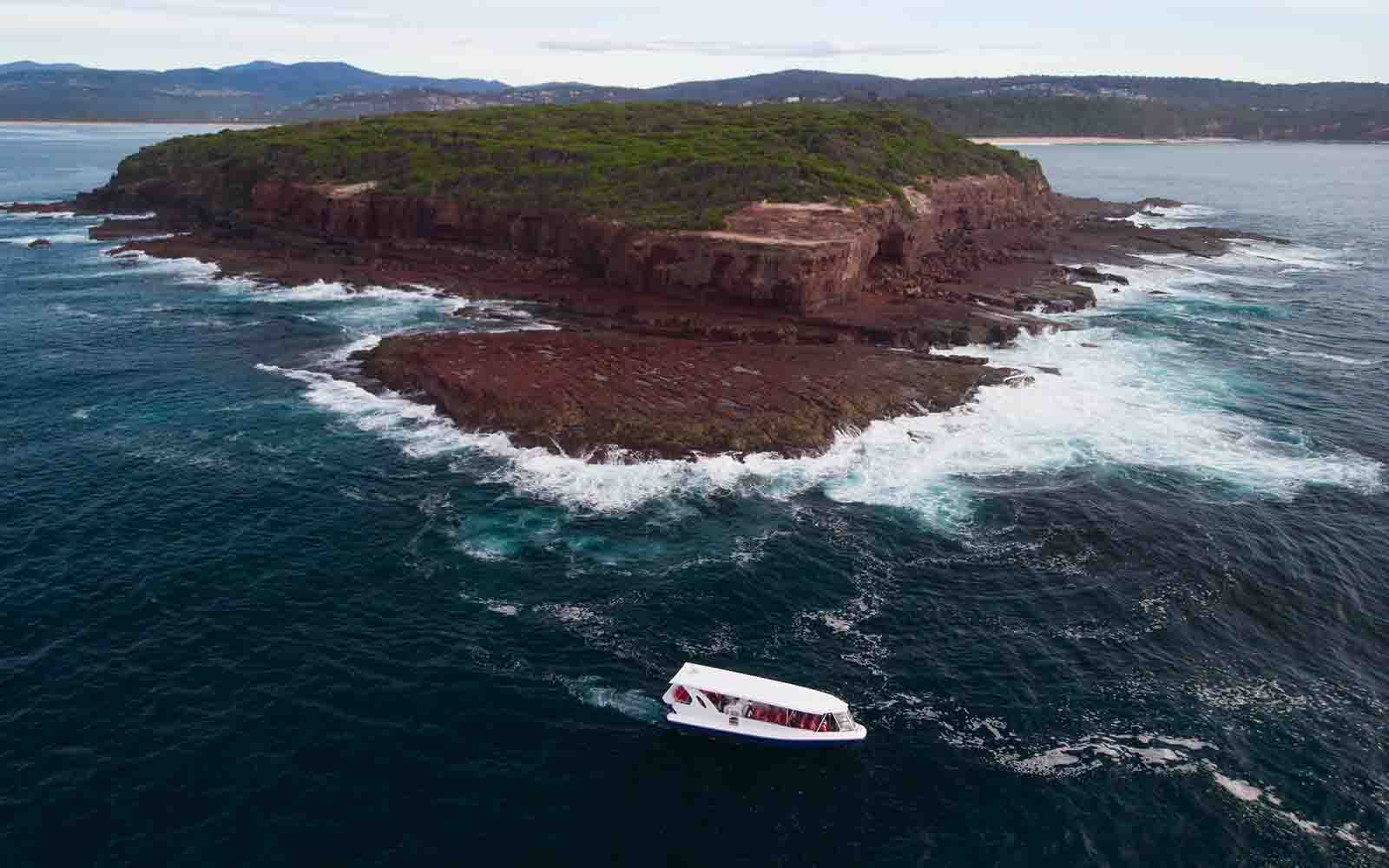
Twofold Bay is the third deepest natural harbour in the Southern Hemisphere, covering more than 30 square kilometres, with Beowa National Park wrapping around its southern shore. That depth and shelter mean a whale can rest inside the bay in water that feels like open ocean but without the swell. Just outside, the warm East Australian Current meets cold water pushing up from the south, and the mixing drives upwelling that feeds the krill and baitfish humpbacks eat. It is one of the few places on the migration where whales reliably feed, which is the real difference of the Sapphire Coast. Whales do more than pass through here. They rest, nurse their calves and feed.
That richness has drawn whales, and people, to this bay for a very long time. The Thaua people have a deep connection to the whales of Twofold Bay, and the story of Old Tom and the Killers of Eden, told at the Eden Killer Whale Museum, is a reminder that the orcas came here for the same reason the humpbacks still do. There is food, and there is shelter.
Is It Different at Merimbula and Bermagui?
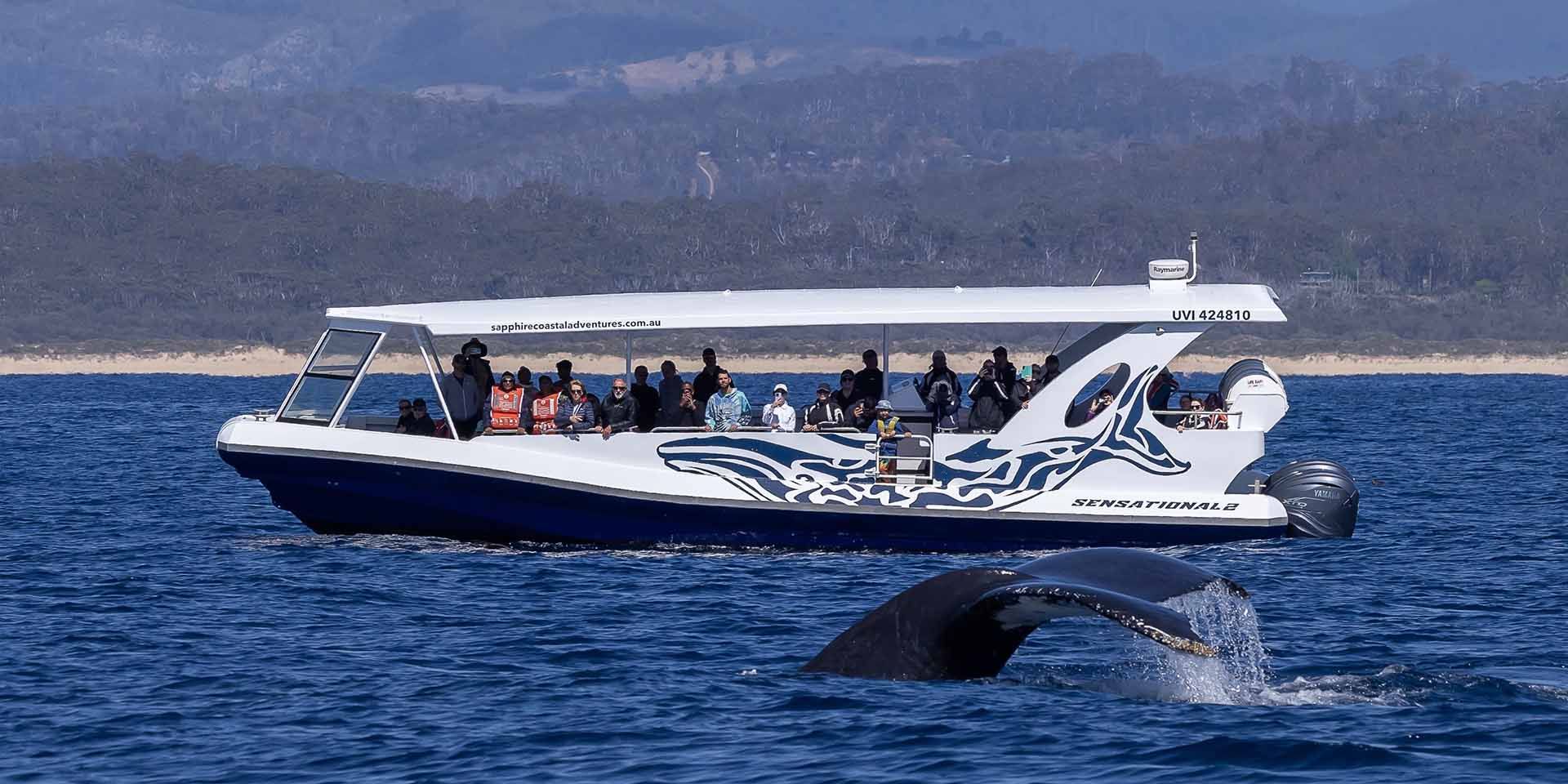
Each port gives you a slightly different view of the same migration. Merimbula Bay is broad and open, and in spring whales travel across it close enough to be watched from the headlands before our crew gets you alongside. Bermagui sits further north, with deep water close to the coast, so the whales there are often travelling pods and the sunset cruises on a Friday afternoon can be spectacular. Eden, with Twofold Bay, is where the whales most often stop. Whether you are looking for things to do in Eden, things to do in Merimbula or things to do in Bermagui, a whale watching cruise in spring is near the top of the list for good reason.
How Is the Northern Migration Different From the Southern?
The two migrations bring different whales doing different things, and that changes what you see from the boat. From May to July the northbound whales are heading for the breeding grounds. There are no calves yet, the adults are fit and heavy from a summer of feeding in Antarctica, and they are moving with purpose, often further out along the shelf than the spring whales. By the time they return in spring they are slower, travelling in family groups, and the mothers are looking for exactly the kind of sheltered water this coast provides.
That is why spring is the season for resting whales inside the bay, and winter is the season for whales on the move. Neither is better. They are simply different days on the water, and if you have only ever seen one, you have seen half the story.
How Do Currents and Weather Change Things?
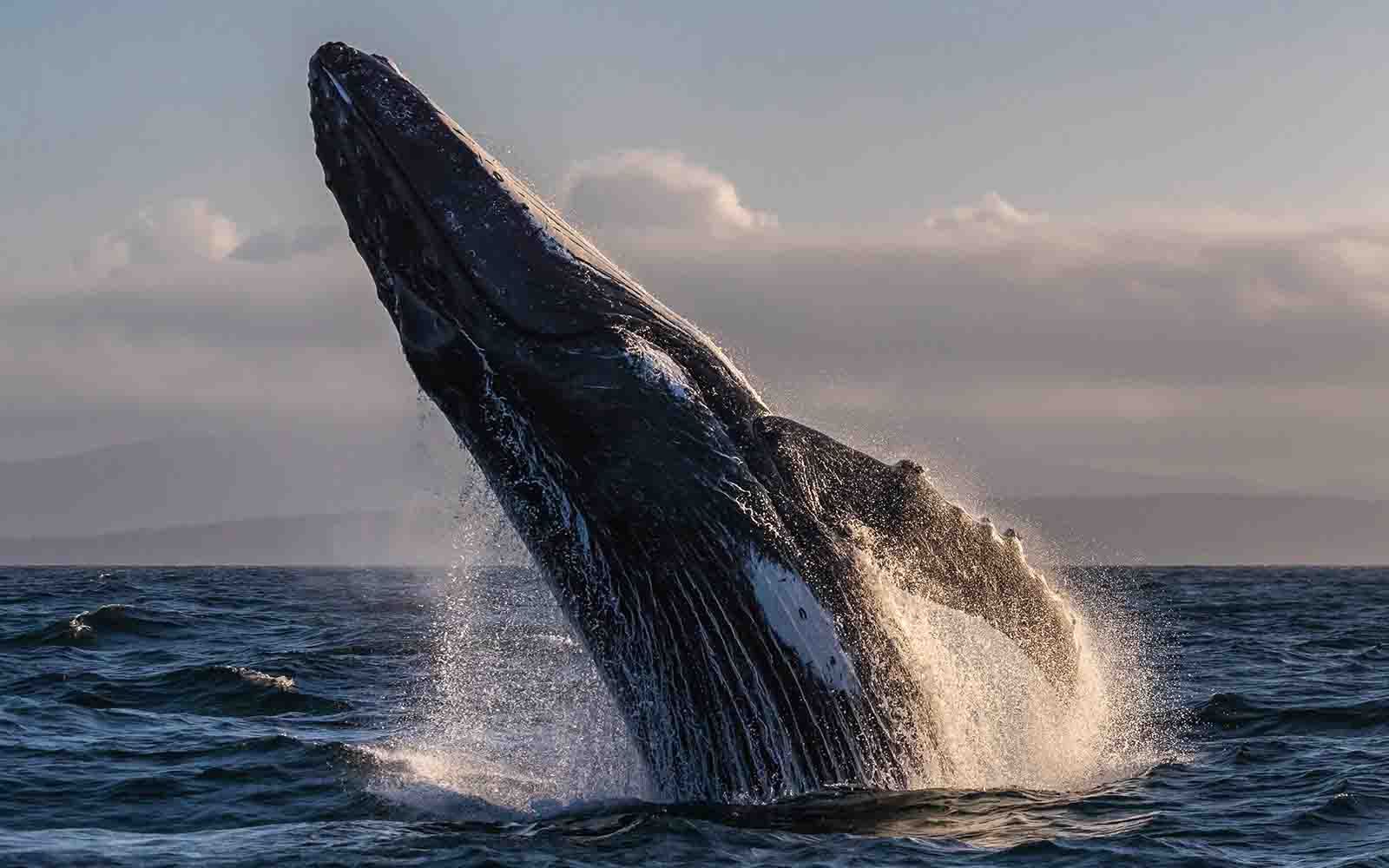
Conditions move the whales from week to week, which is part of what keeps our crew on their toes. When the East Australian Current pushes close to the coast, whales ride it in. When a strong southerly blows through, the mothers and calves tuck further into the bays for shelter and the travelling whales often hold off until the sea settles. Calm mornings after a blow are some of the best days we have, with whales resting at the surface and blows visible right across the bay. Our skippers check the current, the wind and the swell every morning and choose the departure and the course to suit the day.
Being Close Means Watching, Not Chasing
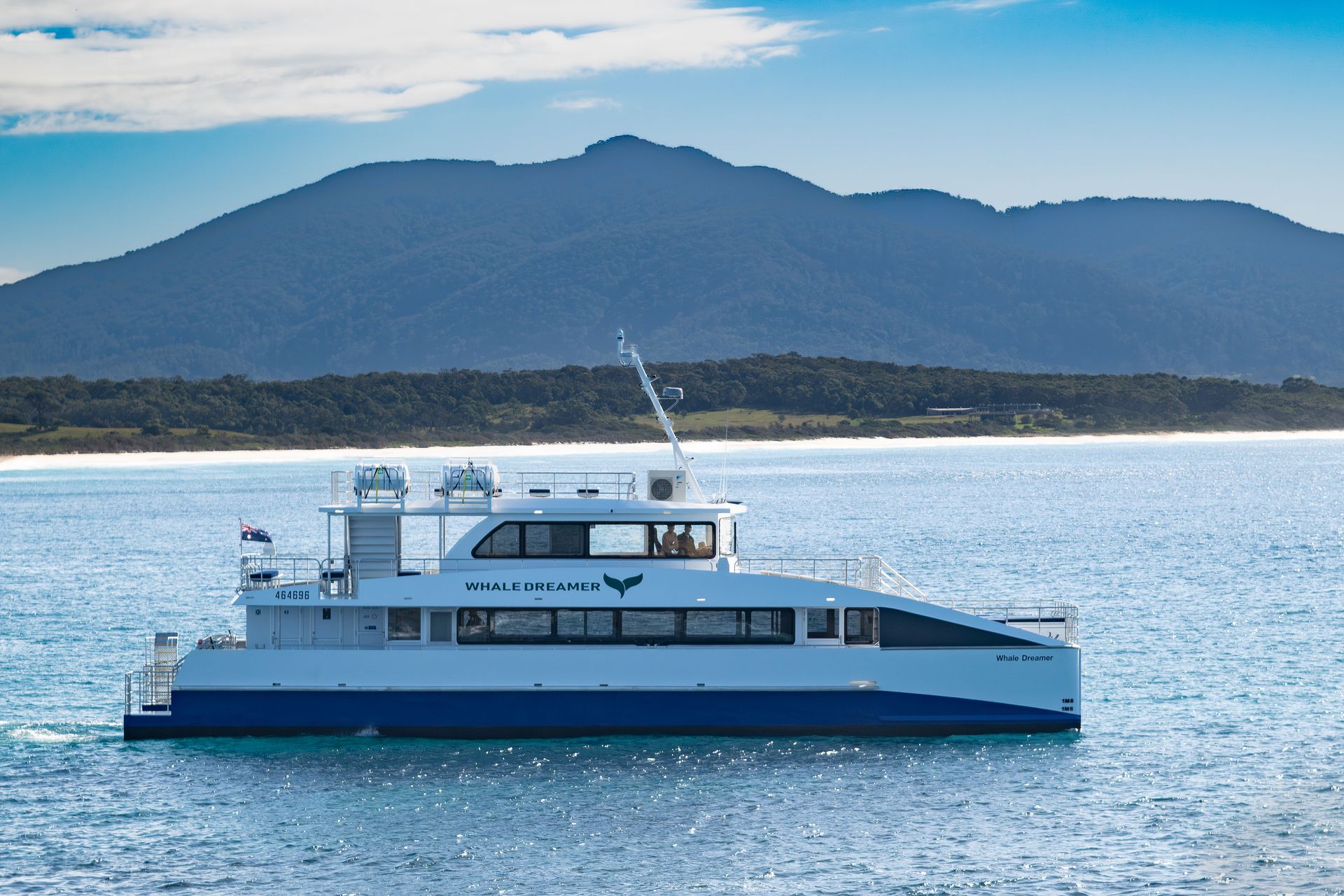
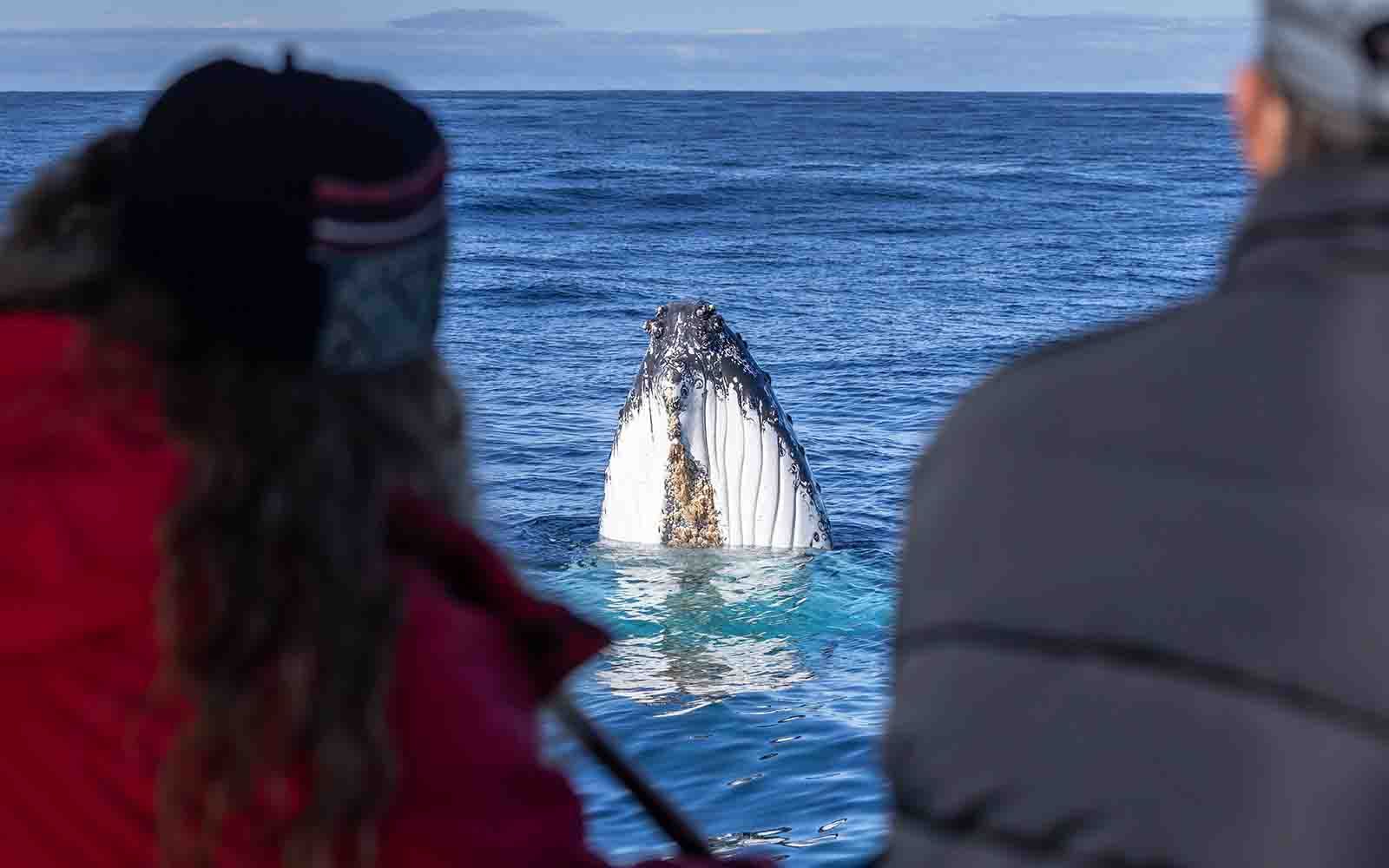
Because the whales come so close here, we can watch them properly without crowding them. NSW rules require vessels to stay 100 metres from a whale and 300 metres from a mother with a calf, and we hold to that. The whales themselves often close the gap, and a curious calf drifting over to look at the boat while its mother rests nearby is one of our favourite sights on the water. The crew will tell you what you are seeing and why, from a pec slap to a mother rolling to nurse.
Come and See for Yourself
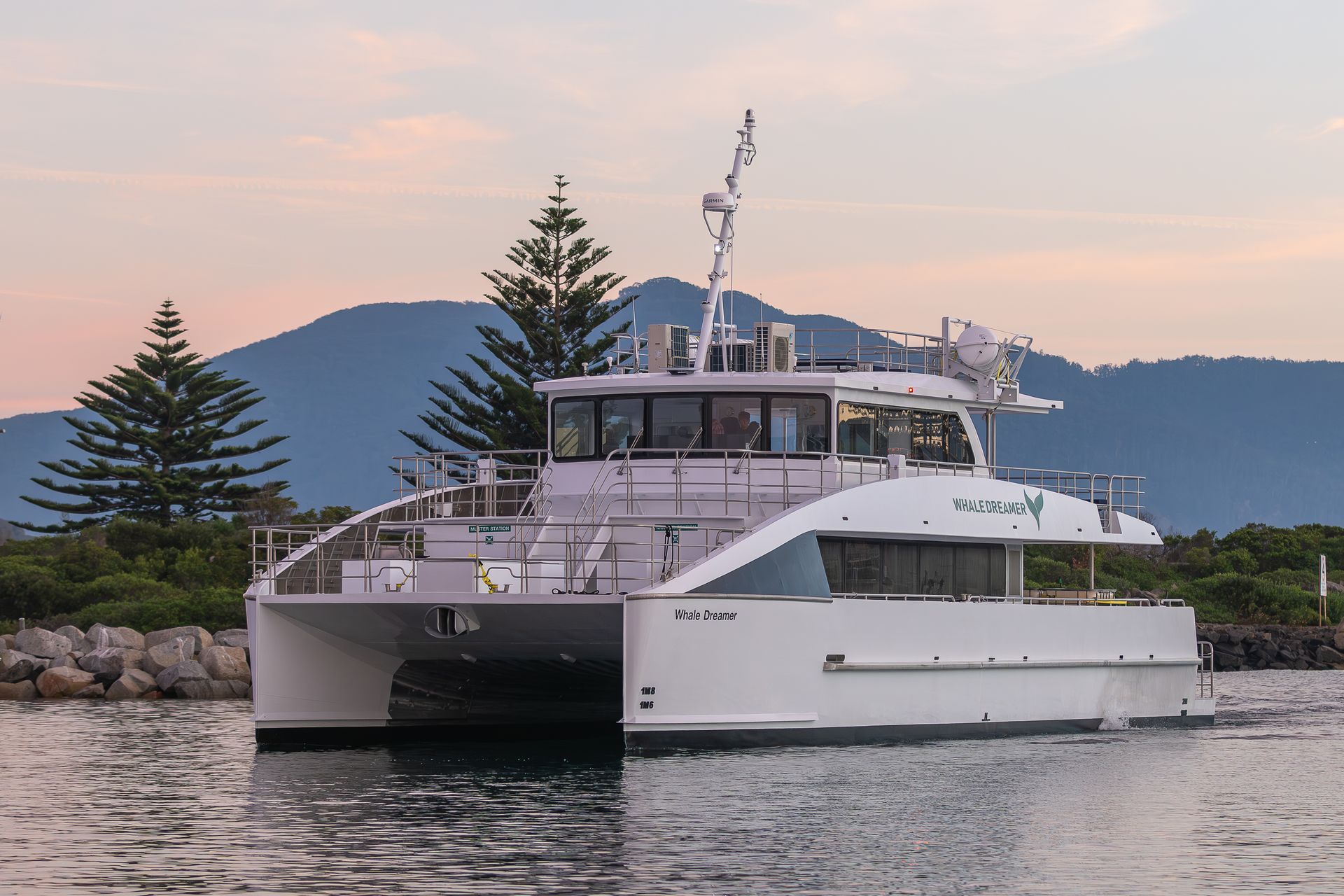
Whale watching on the Sapphire Coast is at its best this year, with mothers and calves resting in Twofold Bay and travelling pods passing Merimbula and Bermagui. We would love to welcome you aboard before the spring season winds down, so book your cruise and come and see why this is some of the best whale watching in Australia. Then put a note in the calendar for winter. The whales will be back from May, heading north past Eden with a very different story to tell, and we would love to show you that one too.
From the deck,
Captain Simon