G’day cruisers,
The humpbacks have headed south for the summer, but the ocean they leave behind is anything but empty. From now until May we swap whale watching for wildlife cruises out of Eden and Merimbula, and for a lot of our crew it is their favourite time of year. The water is warm and clear, the dolphins and seals are busy, and we get to slow down and show you a coastline that most people only ever see from the top of a cliff.
If you are looking for things to do on the Sapphire Coast this summer, here is what makes these two hours on the water so good.
Why Is the Sapphire Coast So Rich in Marine Life?
The Sapphire Coast is rich in marine life because two very different bodies of water meet here. The East Australian Current carries warm water south from the Coral Sea, moving as much as 30 million cubic metres of water every second, and off this coast it runs into cold, nutrient-rich water pushing up from the Southern Ocean.
Where the two mix, nutrients are stirred up towards the sunlight and plankton blooms. Plankton feeds baitfish, baitfish feed everything else, and the result is a stretch of ocean that is busy all year. Scientists recognise the upwelling east of Eden as one of the key ecological features of south-east Australian waters for exactly this reason. Summer is when the current runs strongest, which is why it is such a good time to be out there.
What Wildlife Will You See on a Wildlife Cruise?
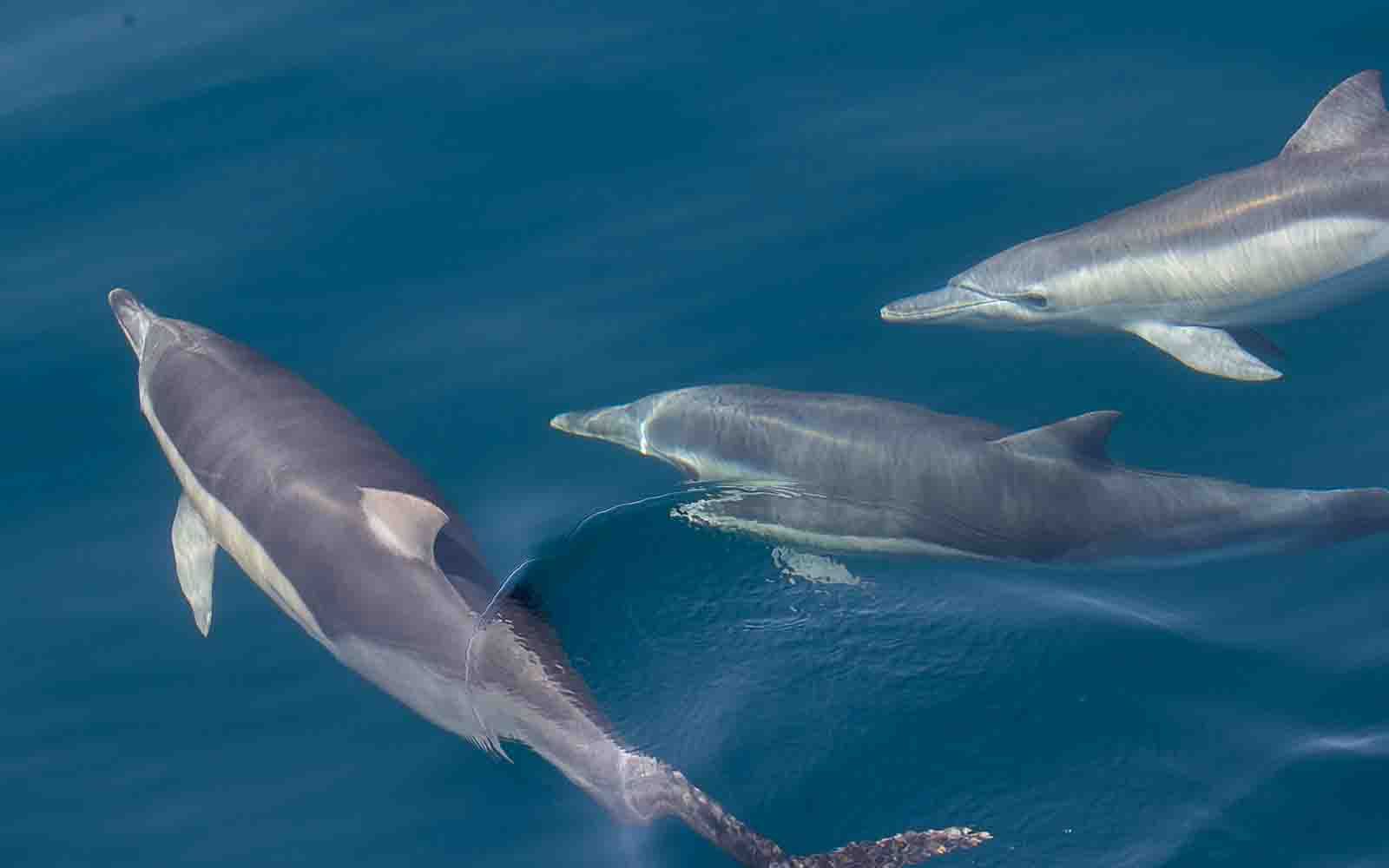
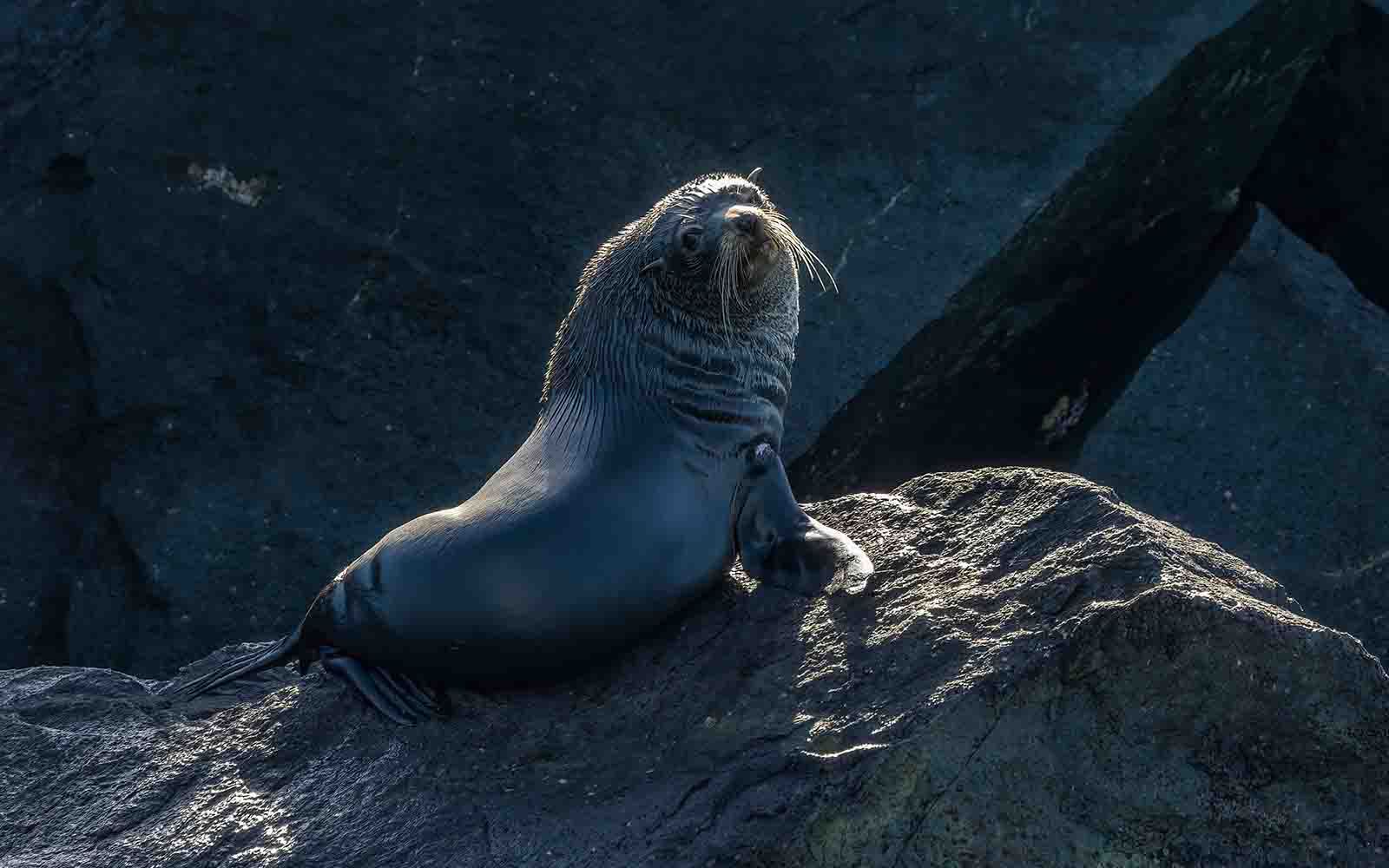
Dolphins, seals and seabirds are the regulars, and we see them on most cruises. Common dolphins and bottlenose dolphins both live along this coast, and a pod riding the bow wave is hard to beat no matter how many times you have seen it. Australian fur seals and long-nosed fur seals haul out on the rocks to warm up, or float on their backs with a flipper in the air.
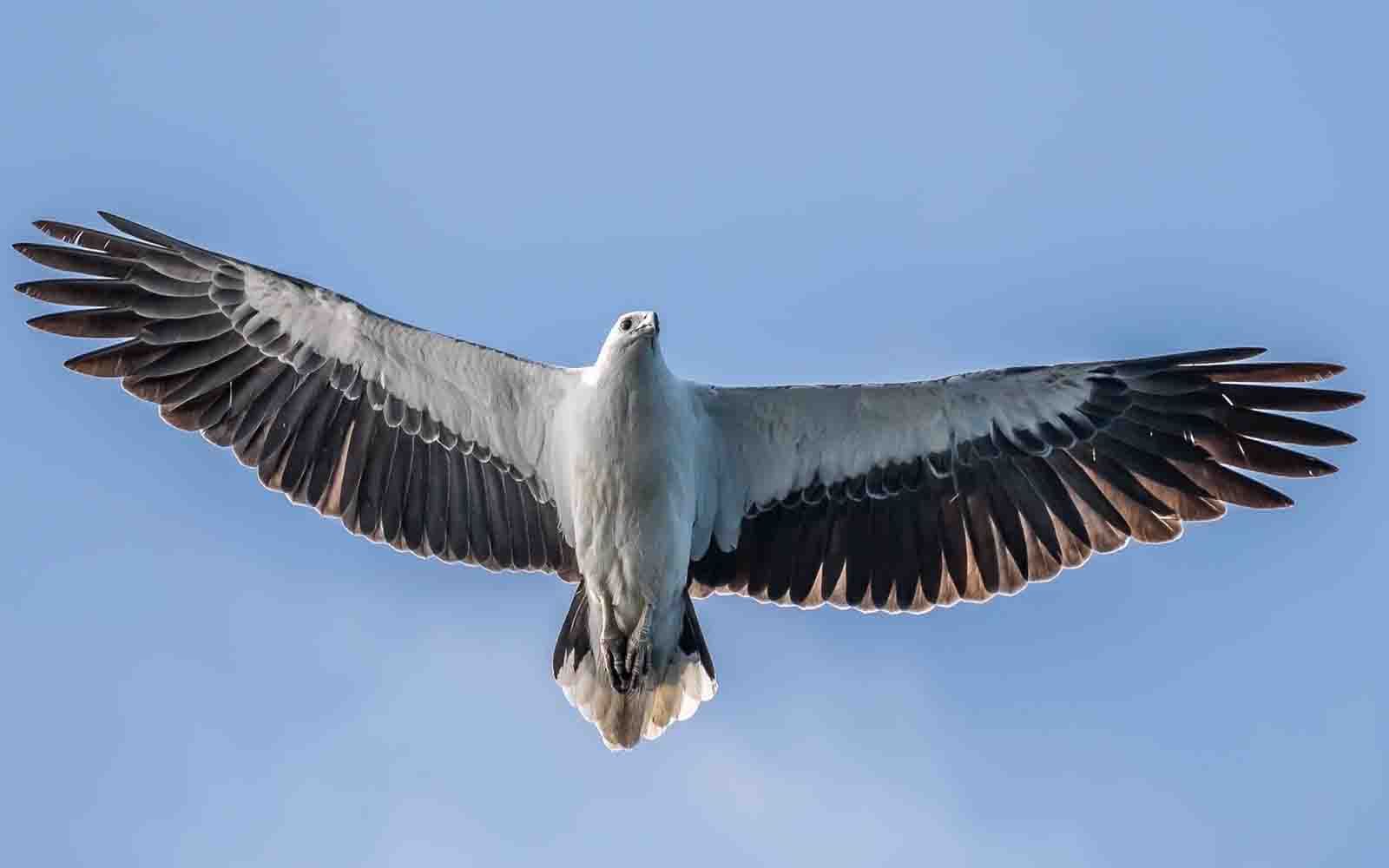
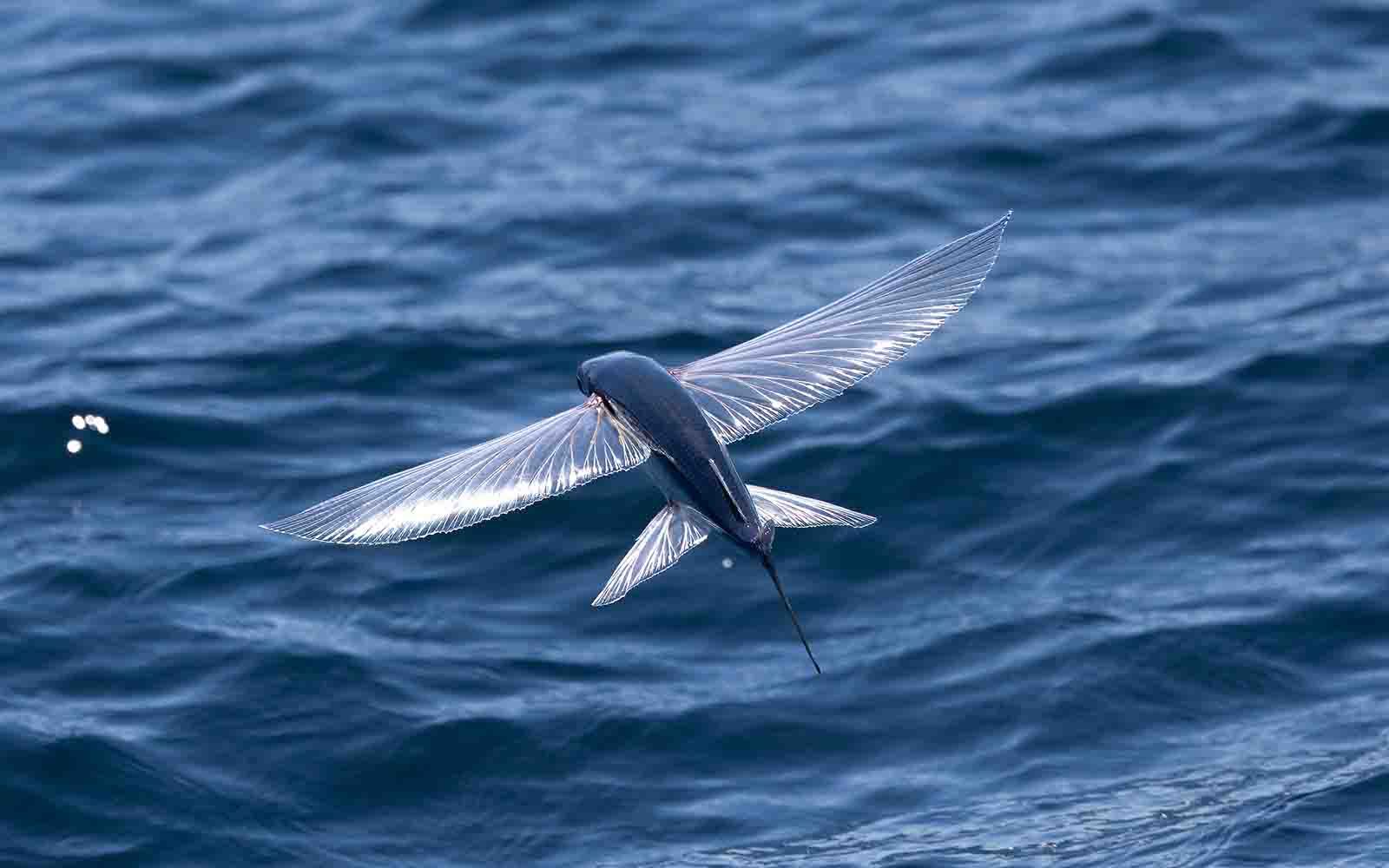
Overhead and around the boat you might spot gannets diving, shearwaters skimming the swell and white-bellied sea eagles working the cliffs. Then there are the surprises. Little penguins, turtles, flying fish and the odd sunfish all turn up from time to time, and no two cruises are the same.
Why Are the Rocks So Red Between Merimbula and Eden?
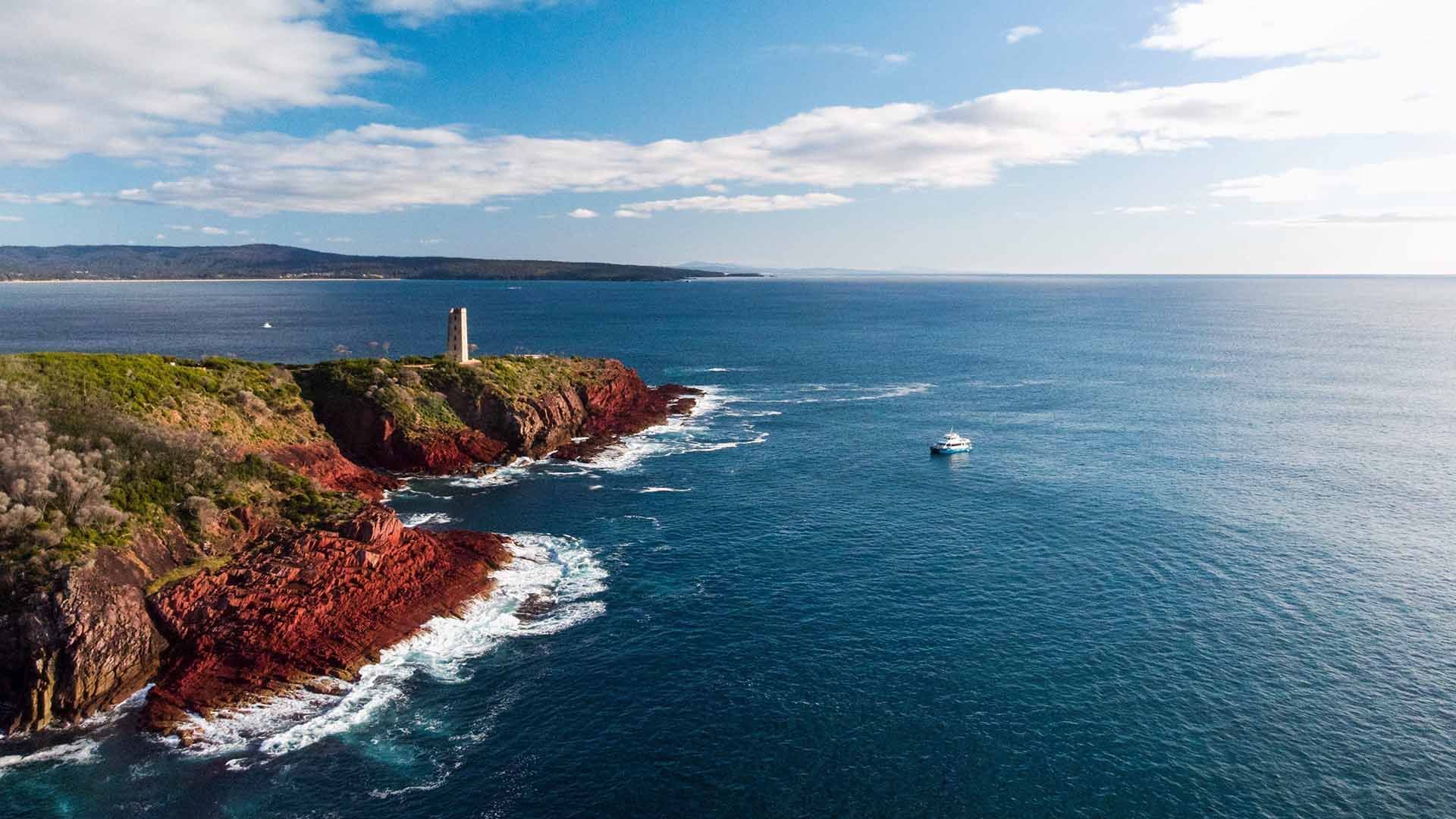
The rocks are red because they are full of iron that rusted more than 360 million years ago. The cliffs and rock platforms between Merimbula and Eden were laid down as river mud and sand in the Devonian period, around the time the first forests appeared on Earth. Those forests lifted oxygen levels, the iron in the sediment oxidised, and the layers were stained the deep reds and pinks you see today.
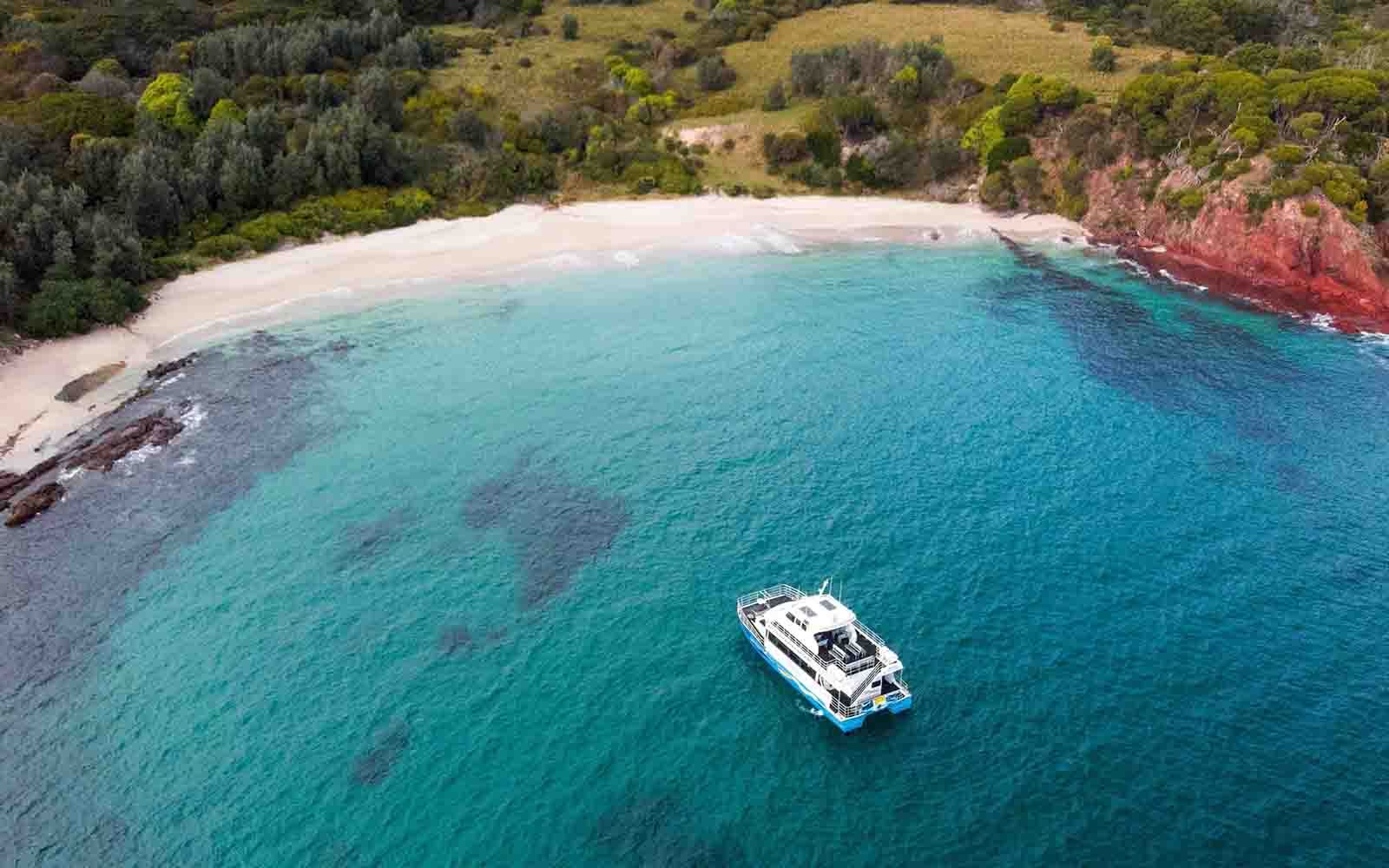
Geologists call the Devonian the Age of Fishes, and the Eden coastline is a world-class fossil fish site. It is also rare. More than 80 per cent of the rocks of this age exposed anywhere on the coast of south-eastern Australia are found in Beowa National Park. Red rock against blue water and green bush is the signature of this coast, and it is at its best from the sea.
What Will You See on the Eden Wildlife Cruise?
The Eden cruise explores Twofold Bay, the third deepest natural harbour in the Southern Hemisphere, and the national park coastline on either side of it. During the last ice age a river ran through a rocky gorge where the bay now sits, and that depth and shelter are a big part of why so much wildlife gathers here.
Depending on the day we head north towards Lennards Island and the Pinnacles, or south past Boyds Tower to the waters off Mowarry Point. Along the way you will see the folded red rock beds at Red Point, the Davidson Whaling Station and Edrom Lodge, with stories from our crew about the whaling days and the Yuin people’s long connection with the killer whales of the bay. Beowa National Park takes in 47 kilometres of this coast, and very little of it can be reached by road.
What Will You See on the Merimbula Wildlife Cruise?
The Merimbula cruise takes in the lake, the bay and the national parks at either end of it. We leave from the Public Jetty aboard Sensational II, cross the bar from Merimbula Lake into Merimbula Bay, and then follow the wildlife and the weather.
Heading north, the coast runs past coastal lakes and coloured cliffs to Bournda Island and Turingal Head in Bournda National Park. Heading south, we cruise to the Pambula River mouth, which is surrounded by national park on both sides, and on to Haystack Rock off Haycock Point, where the red rock is some of the brightest on the coast.
Why Is This Coastline Best Seen from the Water?
It is best seen from the water because so much of it cannot be seen any other way. Most of the Sapphire Coast’s beaches and headlands are bordered by national park, with no road in and only the occasional walking track along the top. From a boat you see the cliffs face on, the caves and rock shelves at the waterline, the seals on ledges that walkers never get near, and the bush running unbroken down to the sea.
You also see how it all fits together. The same deep water and rocky reef that make the coast so dramatic are what bring the fish in close, and the dolphins, seals and seabirds follow.
Come and See for Yourself
Whether you are after things to do in Eden or things to do in Merimbula these holidays, a wildlife cruise is an easy one to say yes to. It suits all ages, it shows you a side of the Sapphire Coast you cannot get to on foot, and every trip is a reminder of why a healthy ocean is worth looking after. We would love to welcome you aboard this summer.
From the deck,
Captain Simon